Sunday, 25 February 2024

Poland (17-25 Feb 24) - Day 2 - Wrocław

Today was our day to explore Wrocław (pronounced Vrot-swaf), which is the largest city in Silesia (a region including some of southwest Poland, and small parts in Czech Republic and Germany) and the third largest city in Poland.

The river Oder runs through Wrocław, and the town intersects two old trade routes, the Via Regia (through the Holy Roman Empire) and the Amber Road (from the North and Baltic Seas to the Mediterranean).

It is believed the city was built in the 10th century and has been ruled by Poland (Dutchy 985-1038) and Kingdom 1954-1320), Bohemia (1038-1054), the Habsburgs of Austria (1348-1469 and 1500s), Hungary (1469-1490), Prussia (1740s) and Germany (1871-1945). The town was German speaking and part of Germany until after the war in 1945 when it was claimed by Poland.

The town was believed to be named after Duke Vratislav of Bohemia, but this has been disputed and current though is that it is named after another Vratislav (Wrocisław in Polish) who was likely a local Prince.

It has also been known by its German name of Breslau.

In 1982 the communist government of the Polish People's Republic implemented martial law in response to pressure from its political rivals, such as the Solidarity Movement and Orange Alternative, which were founded in Wrocław.

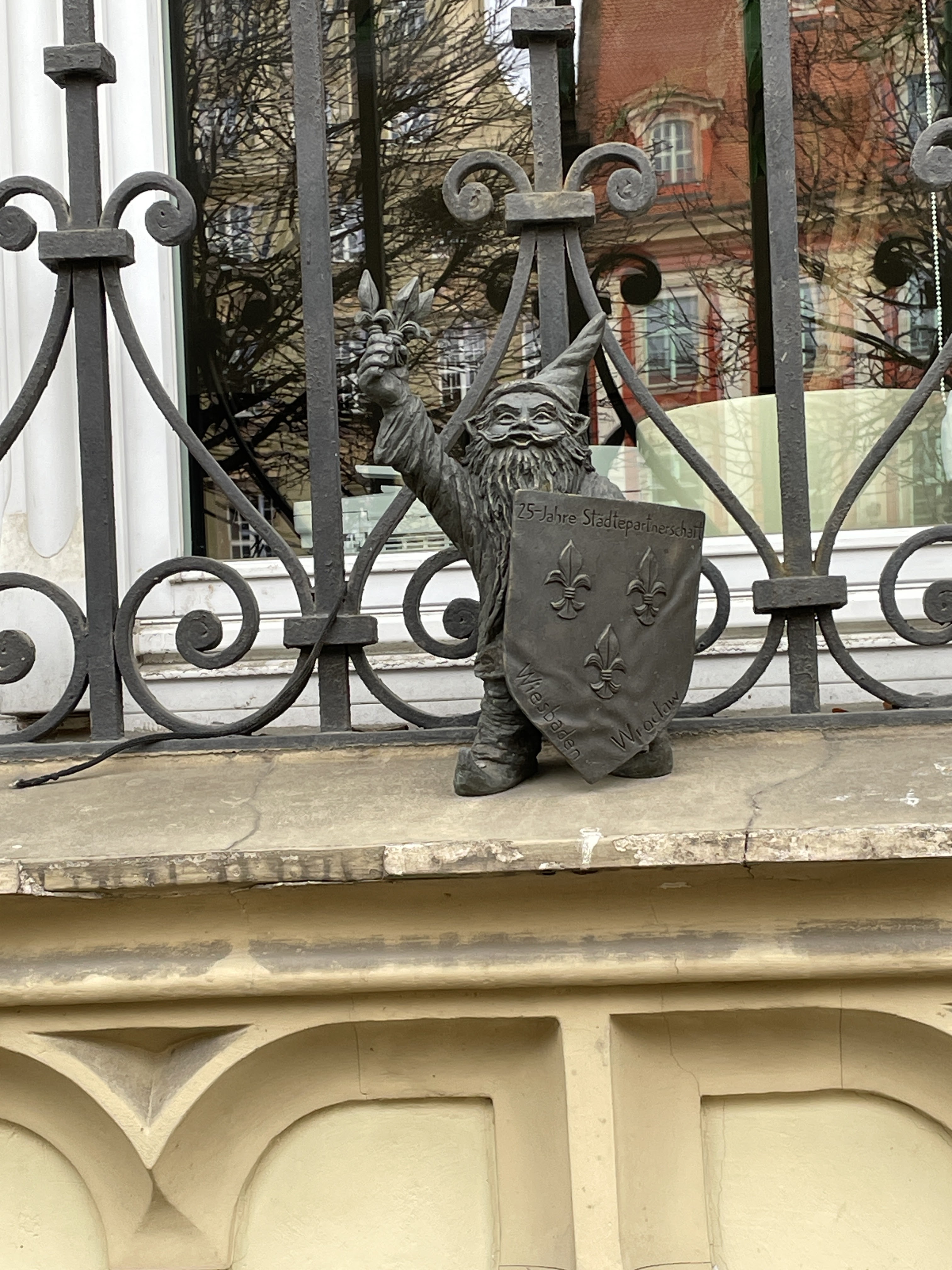
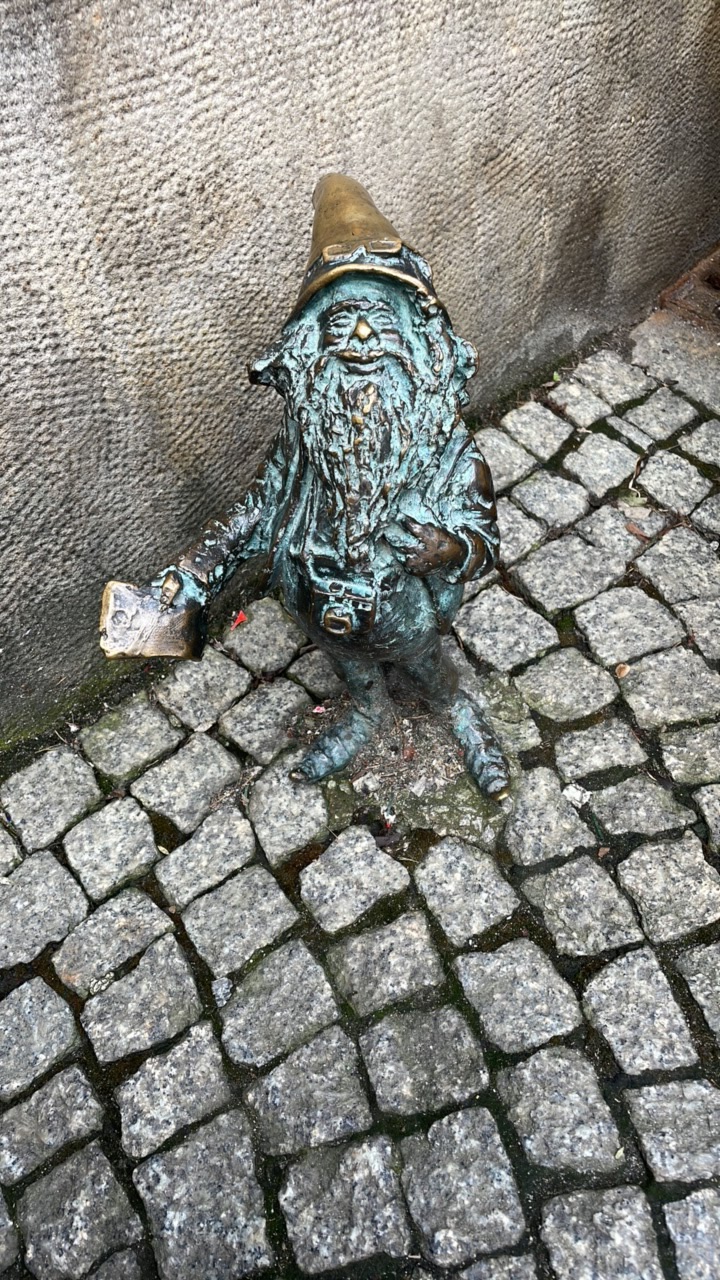
In 2005, a series of bronze dwarfs or gnomes has been installed around Wrocław in recemberance of the Orange Alternative. In 2019 there were 600 gnomes around the city, by our visit there were over 1000. Some of the gnomes are sponsored by interest groups, such as the Deaf-mute and blind dwarfs erected by Wrocław Without Barriers.


We started the day with a walk towards the Old Town Hall (Stary Ratusz) and Market Square (Rynek we Wrocławiu), passing a few interesting buildings on the way. Kris had also purchased a Wrocław gnomes app to located the gnomes. We found as many as we could - pictures at the end.

First interesting building was the District Court (Sądzie Okręgowym):


We then crossed over the City Moat (Fosa Miejska) into the start of old town.

Our first stop (well second, after Kris got a picture of the gnome at the Police Headquarters next to the District Court) was the National Forum of Music (Narodowe Forum Muzyki im. Witolda Lutosławskiego) located in Plac Wolności. The Square was also bordered by the City Museum (Muzeum Miejskie Wrocławia) which was closed, as well another gnome display, the Orchestra (Krasnale Muzycy (Orkiestra)) and the Church of St. Stanislaus, St. Wenceslas, and St. Dorothea (Kościół pw św. Stanisława, św. Doroty i św. Wacława)

Church of St. Stanislaus, St. Wenceslas, and St. Dorothea

National Forum of Music


Orpheus (Orfeusz)

City Museum


From there we headed towards the Old Town Hall, taking a few more photos as we went:


Krokodyl Scultpure

Wrocław market square is one of the largest market squares in Europe and dates back from medieval times. It houses the Old City Hall, New City Hall, the Salt Market and St Elisabeth's Church.

Building of the Old Town Hall (Stary Ratusz) started in the 13th century and it was finished in the middle of the 16th century. The building is in Gothic style. It was damaged in World War II, a bomb crashed through the roof (but luckly didn't explode) and the hall was restored throughout the end of the 1900s.


Bear Fountain (Fontanna Niedźwiadek) added in 1904. It was lost in WWII and rebuilt in 1998.


Some other buildings around the square:


Roof of Saint Elisabeth's Church (the green and red)

The House of Seven Electors (Kamienica Pod Siedmioma Elektorami)


Our next stop was the Bridge of Penitents (Mostek Pokutnic) at the Cathedral of Mary Magdalene (Katedra św. Marii Magdaleny).

This is a bridge that spans between the two towers of the cathedral at 45m above ground level, giving a great view of Wrocław. There are two legends surrounding the towers- the first is that the ghosts of young women who partied with men instead of tending to the house and children were forced to walk the bridge between the towers. The second is the tale of Tekla:


There were 243 steps up to the top of the tower, but the view was worth it!

Towers and the bridge

Heading up


Old Town Hall


Gnomes on the bridge - Tekla i Martynka

St Elisabeth Church


Cathedral Island

We ducked back to the main square to grab a quick lunch and then headed out towards Cathedral Island, stopping for a few more pics on the way:
Church Of St. Maciej

Cathedral of St. Vincent and St. James, Wrocław

Market Hall (Hala Targowa)


Protest against Russia and Putin


Wall of the Jewish Theological Seminary Breslau Synagogue


Our second to last stop for the day was Cathedral Island, the oldest part of the city. This area was originally an island and home to the Cathedral of St John the Baptist (Katedra św. Jana Chrzciciela) and Collegiate Church of the Holy Cross and St. Bartholomew (Kolegiata pw Świętego Krzyża i Świętego Bartłomieja).

We crossed over the Oder River on Most Tumski (Tumski Bridge) and headed into the main part of the island. Unfortunately the kids had drunk a lot at lunch and needed a toilet break. The only nearby toilets needed coin payment and we had no coins, so our trip was cut short and we had to race back to Market Square where we knew there was a toilet they could use.


Most Tumski

Statue of St. John Nepomunk

Collegiate Church of the Holy Cross and St. Bartholomew

Cathedral of St John the Baptist


The Cathedral of St John the Baptist was built throughout the 13th and 14th centuries and reconstructed in 1951 after damage during the war. During the Siege of Breslau and bombing from the Soviet Red Army the church was badly damaged, about 70% of the building needing serious repairs. Reconstruction started in 1951 and the towers were repaired in 1991.

The Collegiate Church of the Holy Cross and St. Bartholomew was built in 1288.

Our final stop was a bit of fun for the kids - Moviegate. This small museum, held in an old World War II gas and bomb shelter and it houses all sorts of movie props and memorabilia.

It might be easier to just explain with photos:

Entrance
Heading In
Through the Shelter doors


Aragog and the letters from Harry Potter

Optical Illusion box

Costumes from the movie 1917

Vader mould from Starwars

Tom's head being served

Optical Illusion

Cam's head being served

Props from the Prestige

Optical Illusion

Storyboards from Star Wars

Storyboards from Indiana Jones


World War II Weapons recovered from the area


Reconstruction of how the shelter would have looked


Captain America Shield

Liquidator Costume from Chernobyl

Corridors

Mask from Fifth Element

After leaving Moviegate we stopped in at a grocery store to pick up some things to cook for dinner and then headed back to the apartment.

It had been a long day, but Wrocław was pretty cool to explore.

Here's the selection of the 82 Wrocław gnomes we found:

Rejestruś (Registrar)

Klub Kibiców Niepełnosprawnych (KKN) Supporters

Rachciach - Whambam the Lock Cutter

Tian Tian

Profesor Miodek

Karmelek (Caramel)

Dialogomir 

Bankomatnik, Pinek i Chipus (ATMers - Pinek and Chipus)

Drukarz Kacper (Printer Kacper)

Słuponik Solny 2 (Sonly Pole 2)

Piwosz z Psem (Beer man with Dog)

Dzioopelka

The Orchestra

Gołębnik (Pigeoner)


Wiesiek partnerski (Village Partner)

Rafał Dutkiewicz (Former city major)

Źyczliwek (Well Wisher)

Wiking (Viking)

W-Skers, Ślepak and Głuchak (Wheelchair, Blind One and Deaf One)

Wodziarz (Waterman)

Lionek

Halabardnik (Halbard)

Troszka and Adoratorek

Franek Moczymordka (Franky the Drunkard)

Złotek (Money man)

Motorcyklista

Klucznik (Key)

Gwaruś (Miner)

Janinek

Wromeo i Julianka

Latarnik (Lamp Lighter)


Syzyfki (Sisyphuses)

Capgeminiusz Programista (Programmer Capgeminiusz)

Świdnicki Pole 2

Dziarus (Tattooman)

Solidarność Walcząca (Fighting Solidarity)

Świdnicki Pole 1

Ditek

Bankier (Banker)

Unicefek (Unicef)


Giełduś (Broker)

Podatkus Doradek (Tax Advisor)

Akademiusz (Academic)

Słuponik Solny 1 (Sonly Pole 1)

Krasnalka demokracja (Democracy Dwarf)

Wyrostek i Zadymek

Konspirek (Conspirator)

Lombardzik (Pawn Shop)

Gladiatorek (Gladiator)


Patrolek (Patroller)

Leszko z Wroclawca (Leszko in Wroclaw)

Radcuś (Couselor)

Powerek

Cukiernik (Confectioner)

Helper

Kolekcjoner (Collector)

Renata Otolińska - Symbol of Student Oppression

Zeccuś 

Gryfosław 

Tekla and Martynka

Wypłacarek (Payers)


Miłostróż - Guardian of Hearts and Feelings

Turysta (Tourist)

Zraszacs Wodny (Water Sprinkler)

Bartonik

Exchanger

Suvenirek (Souvenir Vendor)

Orator


Unfortunately we missed Pappa Dwarf, the one that started the whole trend, but here's a pic from wikipedia of him:


Well, it actually started with graffiti of gnome-like people with orange hats (in recognition of the Orange Alternative), but this was the first of the gnomes.

Poland (17-25 Feb 24) - Day 1 - Travel Plans

This week was 'Sportlov' the school holiday week that most Swedes use to go on a skiing holiday. We had discussed a few options back and forth, but had decided not to do anything this week because I had a stack of work and Tomas was still recovering.

By Wednesday of the week before I had somehow managed to catch up on my work and Tomas was starting to perk up, so we made the decision that we would go and visit Poland for the Sportlov week.

We sketched out a few options, the first was to take the ferry from Rødby and drive through Germany into Wrocław, Poland, but this would take almost 12 hours, with most of it being driving (877km).

Instead we saw that there was a daily ferry from Trelleborg (30min south of us) that would go to Sassnitz in Germany, making it a 10 hour trip (773km) with a 3 hour ferry.

Better still we found a ferry that would go to Świnoujście in Poland from Trelleborg. It was a long ferry trip (about 6hrs) but it would cut down how much driving we had to do to about 5hrs (485km).

Then we needed to work out where we wanted to visit. The return ferry was at 1am on Sunday morning, so we needed to make sure we were back in time for that. I was super keen to do Krakow, but it would be too far to get there comfortably in a single day. The city of Wrocław was nearby and apparently nice to stay at, as well as being surrounded by some nice forts and castles.

So the first part of the trip was locked in. We would take the ferry at 9am on Saturday morning and arrive in Wrocław around 9pm that evening. The first days could be spent exploring Wrocław and the nearby forts. Next we would head to Kraków, which was about 3-4hrs drive away. But of course, this changed when we found Ogrodzieniec Castle that was just outside the town of Katowice between Wrocław and Kraków. In addition to being a very cool looking castle ruin, it had been used as Sodden Castle in the Witcher TV show.

So the first leg was changed again:

Day 1 - drive to Wrocław
Day 2 - Explore Wrocław
Day 3 - Explore the forts and castles around Wrocław then drive to Katowice
Day 4 - Ogrodzieniec Castle then drive to Kraków

(Aside: The day set aside to explore Wrocław was a Sunday, which was going to be a bit of a problem as most shops were closed in Poland on Sundays, so the original plan was to do the forts on Sunday and then Wrocław on Monday. This changed when we realised how much of a pain parking was going to be and since we were comfortably parked (and on Monday would need to leave the carpark at checkout time -10am) and tired of driving we searched up to find most of the tourist stuff was still open. So, we did Wrocław on Sunday and the forts on Monday. The only issue with this was that it meant a longer drive to Katowice, which got us in later than I'd hoped for.)

Next we looked at trying to hit Warsaw, but it was another 4 hour drive from Kraków and took us further away from the ferry port making our last day a long drive. We considered Gdansk also, but again that was too far.  In the end we settled for Poznań which was between Kraków and the ferry port.

With everything locked in, we got an early start on Saturday. The car was packed and we caught the Nils Dacke, TT Line Ferry.


Parking on the ferry was a little chaotic - we were led into a tiny space with cars and trucks jammed around us. It must have had some pattern though as they got everyone in. It did take us about 40min to get off at the end though as we were packed in right at the back.

Our car


The drive from Świnoujście to Wrocław was uneventful except for two things...

First was the giant Jesus statue that we saw from over 7km away - we finally got to check it out on the last day:

Blurry photo as it was dark and we were driving

Second was us stopping at KFC for a meal. We ordered on the machines and our number appeared on their screen and then disappeared. We waited about 30min as they staff looked like they were starting to tidy up for the end of the day. Eventually a young lady come up and asked us something in Polish. When we apologised and said we only spoke English, she called up someone on the mic and few minutes later another girl came over and said "Can I help you?"

We were a little confused so said we were waiting for our food. She replied that they had nothing in their system. It must have looked weird to them that we'd come in and were just sitting around for half an hour... They checked the receipt and made the food, but it ended up turning what should have been a 15min stop into just over an hour and made us arrive at the apartment much later than we planned.

Our apartment in Wroclaw was the Zielińskiego Wrocław Centrum by Renters which was well placed in the middle of the town and even better, came with parking.

The big issue was when a bunch of tired Aussies arrived and tried to work out how to get in.

The road was completely filled with parked cars so we ended up just pulling up to the carpark entry which was blocked with a boom gate. We had a code to get into the building and then we could find the keys in a lock box in the foyer. The instructions said that it was the building across from the boom gate, and the whole area was dark, so I left Kris and the boys in the car and tried to open the door - the code didn't work. After a few minutes trying, I messaged the company and got a reply that there was a youtube video showing the entrance. It turned out that our room was down the end of the complex about 4 buildings down. I raced down there, got the keys and came back to let Kris in. The next issue was finding a carpark. Yes, parking was available (they did say they couldn't guarantee a spot), but the carpark was packed! There were even cars up on the grass edges. Parking outside was not an option as the road was also full and there were no parks available nearby. Eventually Kris found a spot on the grass out of the way. The next morning we found a single carpark free and moved the car there (hence our reluctance to leave and go driving to the forts on Sunday).

Carpark the next morning

If you squint you may be able to see where we parked. In the top right there is a dark red car parked on the curb at the entrance to the back part of the park. There is a caravan on the grass behind it and a silver car on the curb in front. The gap between them was just big enough (that with a lot of manoeuvring and a 78-point turn) Kris managed to back our black car in next to the caravan. The park we then moved into was between the white van and black car at the end of the front part - the only free park visible. It was going to be risky to get out as there wasn't really enough room to pull out and turn (we decided we could also go four-wheel drive mode and back over the curb and grass), but luckily when we went to leave the van had gone and we had space to get out.


Friday, 16 February 2024

Kivik and Haväng (11 Feb 24)

 After spending the last month shuttling between hospital and home, we decided that this was a good weekend to get out and see some more of Sweden.

Kristine and I had been watching a show called "Historien om Sverige" (The story of Sweden) which discussed Sweden's history from the stone age through to modern times. As we watched we made some notes about the places that we saw that looked interesting to visit.  One such place was Kivikgraven or Kungsgraven (The Kivik Grave / The King's Grave).

It turns out that we had been there once before in April 2016 (https://puplettsinsweden.blogspot.com/2016/04/simrishamn-and-kivik-9-april.html) but we didn't remember much.

The boys decided to stay at home and play video games (surprise, surprise...) so Kristine and I took off towards Kivik on the south east coast of Sweden.


Malmö weather was fairly mild when we left, but the weather in Kivik reminded us that it was definitely still winter:


We found a park near the Kivikgraven and walked over to the site.  You are able to go inside the grave, but unfortunately it was closed for winter.  Kris and I didn't remember entering it last time either, so we checked the blog, and yep - last time we had come it was also closed for winter.  Previously we had been able to walk up to the door of the monument, but now it was all fenced off and entry was only through a locked building.  Oh well, guess we are coming back again later...

Kungsgraven, The Kings Grave, is believed to have been built in the early Bronze Age (around 1700-1000BC) and is a burial mound containing a large coffin. The inside of the grave contains many rock paintings representing animals and ships (which we couldn't see as we couldn't enter).

In the 1700s, the site was used as a quarry until the workers reached the cairn and the central coffin. The site has since been restored.

It is believed that at least four people, mostly teenagers, were buried in the coffin at various times throughout the Bronze Ages.

From the outside, the grave looks like a mound of stones:


The signs outside the mound tell that, while rock art was common in the Bronze Ages, it was not commonly found in tombs. The grave was named Kungsgraven as it was originally believed the be the grave of a king, however the original occupant appeared to be 13-15 years old. Outside the mound were signs of graves from 2000BC that appear to have been reused.

Throughout the years, the tomb was used for several burials, the latest known was in 700s when a man and dog were buried in the tomb.

The items buried with the teenagers, such as bronze, amber, weapons and jewelry indicate that they were from a social elite.


After a quick walk around the outside, we headed down to the beach, where the weather was whipping up the water:


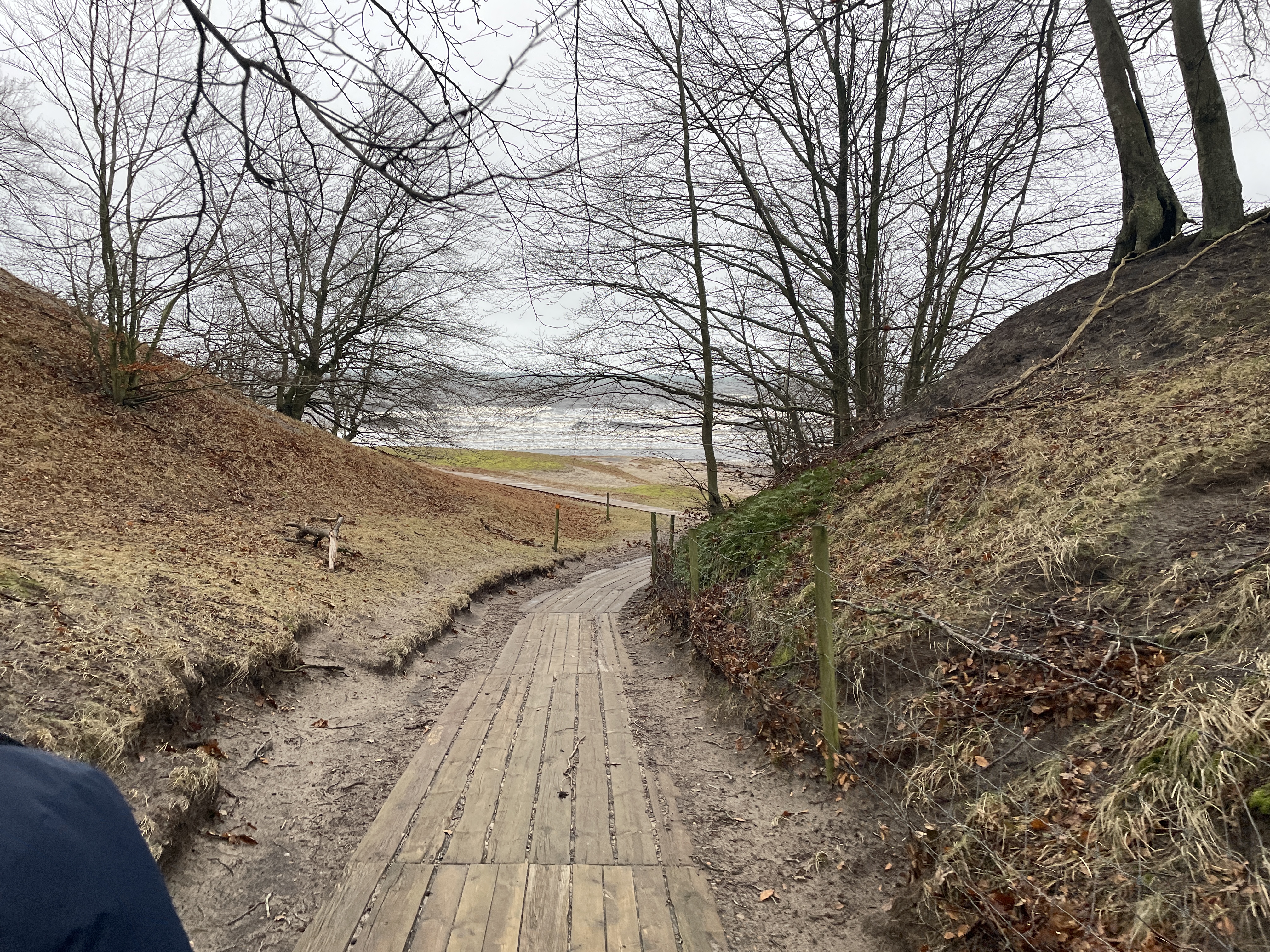
We then decided to head up the coast a little to visit Haväng, a popular beach nearby.  Despite it not really being beach weather (-1 and a little rainy) we decided to go for a walk to find the Havångdösen, which was a neolithic burial chamber from 3000BC.


After a couple of false starts, such as a private road and a muddy dirt track, we finally got a park at Haväng and were greeted with a path down to the beach.  There were tourist signs pointing to the right, so we headed down to the sand and crossed a small bridge, heading south. We never saw the Havängdösen, because it turns out that it is just left of the carpark... Another reason to go back I guess.


Part way down the beach we came across the Brösarps bunker


and a little further down the beach was the Stenören's ålabod, a former eel store that was used by fishermen in the 18th century.


The shed was used to house eel and trout caught by fishermen from the 1700s onward.

We then decided to head towards the hög stenar (high stones) a burial ground from the Iron Age. In order to get there we needed to climb up a hill and walk through some wilderness. After about half an hour we ended up in a cow paddock, somewhat near the stones.  It was starting to get dark and we had about 45min walk back to the car, so we started on our way back - backing today 0 from 3 for things we wanted to see.


On the way back we did find a little farm building that was a small museum, Lindgrens länga.


and we did seem a small set of stones in a farmer's garden